
Where to submit a press release depends on three factors: your budget, your target audience, and whether you need broad visibility or focused journalist engagement. Paid wire services, free submission platforms, and direct email outreach each serve different goals, and the most effective campaigns typically combine more than one channel.
Most businesses waste time and money sending releases to the wrong places. A startup founder blasting a generic wire service when five targeted journalist emails would generate better coverage is a common and costly mistake. Similarly, relying solely on free submission sites rarely produces meaningful media pickup, since those platforms lack syndication partnerships with major news aggregators.
The difference between a press release that gets ignored and one that lands real coverage often comes down to distribution strategy, not writing quality. Understanding which channels reach AP, Google News, Bloomberg, and local newsrooms gives you a concrete advantage over competitors still guessing where to send their news.
TL;DR
- Paid wire services (PR Newswire, Business Wire) guarantee broad placement but cost $350-$3,000+ per release
- Free submission sites (PRLog, OpenPR) provide basic online visibility but rarely reach real newsrooms
- Direct journalist outreach is free, high-effort, but generates the highest quality coverage when done right
- For Google News indexing, use a paid service — most free platforms do not get indexed
- Local media (newspapers, TV, radio) often covers stories that national outlets ignore — don't skip them
- Find a keyword people actually search for using free tools like Google Keyword Planner, then optimize your headline and lead for it — press releases that rank in search drive long-term traffic, and the best backlinks are the ones that get clicks
Where to Submit a Press Release: Top Distribution Services, Free Platforms & Major Outlets
Three main channels exist for press release submission: paid wire services, free submission sites, and direct email outreach to journalists. The right method depends on your budget, goals, and target audience.
Paid distribution services like PR Newswire and Business Wire offer the widest automated reach across hundreds of outlets. Free platforms provide basic online visibility and SEO backlinks. Direct outreach to reporters delivers the highest engagement per pitch, since each message is personalized and relevant to the recipient's beat.
Paid Press Release Distribution Services
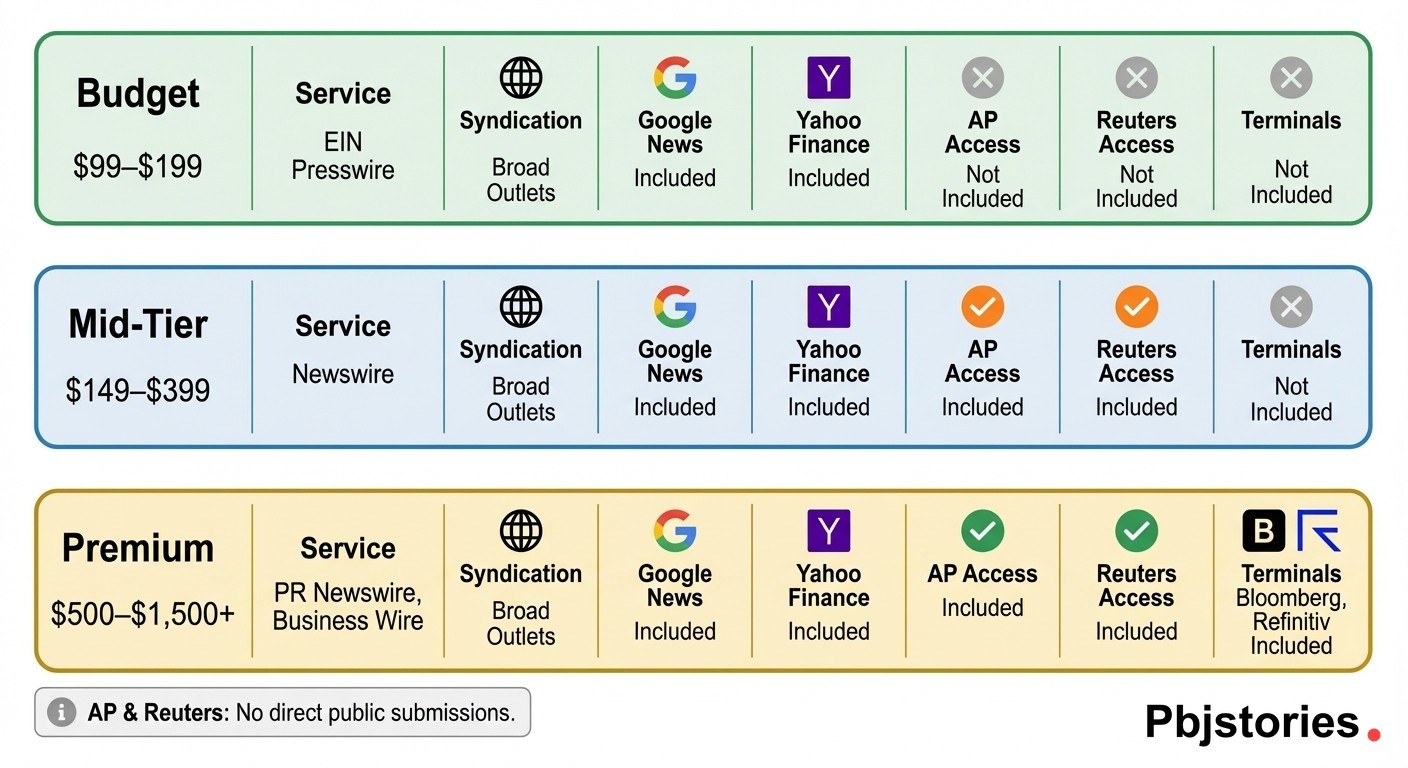
Paid wire services syndicate your release to hundreds or thousands of media outlets, financial terminals like Bloomberg and Refinitiv, and news aggregators such as Google News and Yahoo Finance through established feed partnerships. This automated reach is what separates paid distribution from every other method.
The major services fall into three pricing tiers:
Budget ($99--$199): EIN Presswire offers affordable distribution with solid reach for small businesses and startups.
Mid-tier ($149--$399): Newswire provides broader syndication and additional targeting options.
Premium ($500--$1,500+): PR Newswire (owned by Cision) and Business Wire (a Berkshire Hathaway subsidiary) deliver the widest distribution, including direct feeds into AP and Reuters.
That AP and Reuters access matters. These wire services do not accept submissions from the public, so PR Newswire and Business Wire remain the only reliable pathway for most companies to appear on those networks.
GlobeNewswire, operated by West Corporation, sits between mid-tier and premium, with strong financial and investor-focused distribution. For a deeper breakdown, see this comparison of best press release distribution services.
Free Press Release Submission Sites
Several platforms let you submit a press release for free. openPR, operating since 2004, remains one of the most established free options. PR.com offers a free tier alongside its paid plans. PR Log, Online PR Media, and 1888 Press Release round out the most commonly used free submission sites.
What do these platforms actually deliver? Basic online visibility, some SEO value through backlinks, and indexing by search engines. Free sites rarely syndicate to major news outlets, though. Pickup rates are low, and the real audience skews toward other PR professionals or automated scrapers, not working journalists.
Free platforms still make sense in specific situations: bootstrapped startups testing messaging before investing in paid distribution, supplementary visibility alongside direct journalist outreach, or building a backlink profile for SEO purposes.
How to Submit to Major Outlets: AP, Reuters, Google News & Yahoo News
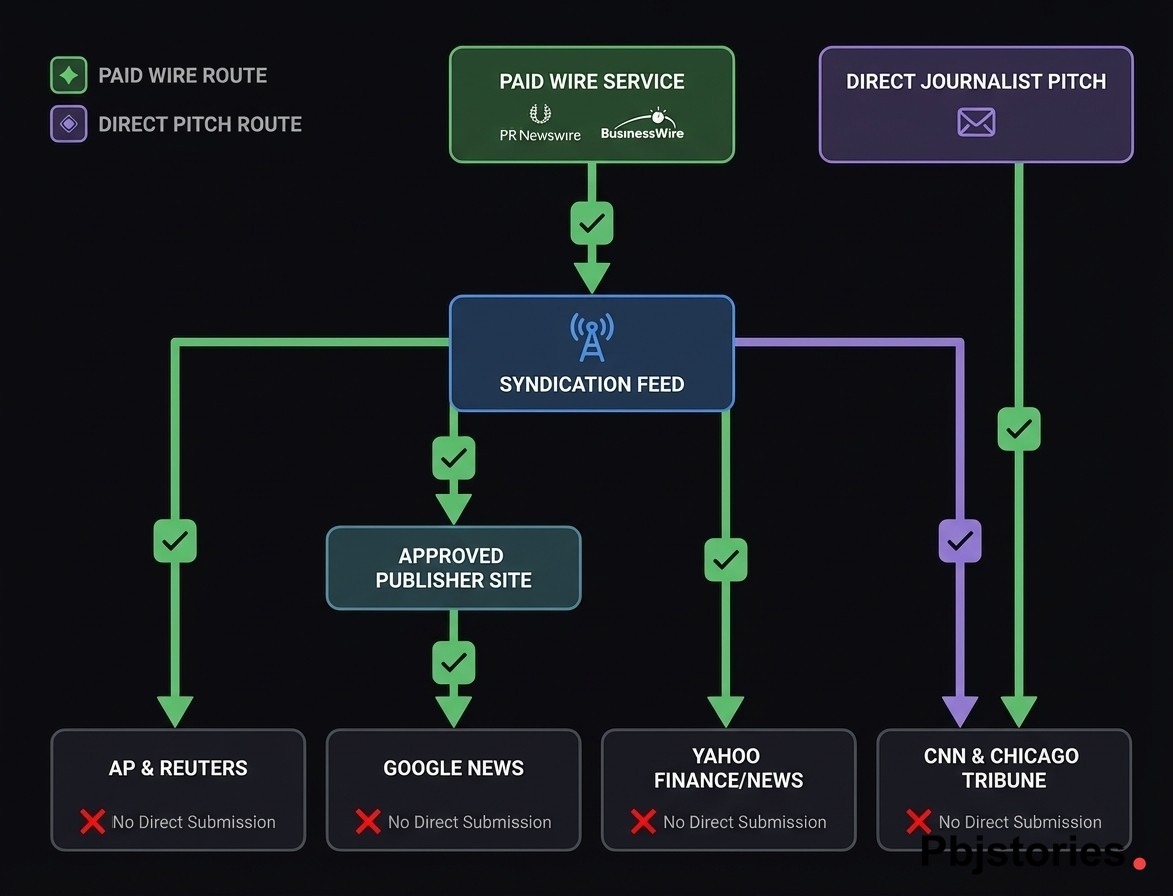
AP (Associated Press) and Reuters do not accept direct press release submissions from the general public or most businesses. The standard pathway runs through PR Newswire or Business Wire, both of which maintain contractual syndication feeds into AP and Reuters. Even then, AP and Reuters editors decide independently what to pick up based on newsworthiness.
Google News works differently. You cannot submit a press release to Google News directly because it indexes content from approved publisher sites automatically. Your release needs to appear on a Google News-approved outlet first, which is why distribution services that syndicate to those outlets remain the primary route.
Yahoo Finance and Yahoo News follow a similar syndication model. PR Newswire, Business Wire, and GlobeNewswire all have partnerships that push releases to Yahoo properties. The same principle applies to CNN, Chicago Tribune, and comparable outlets: none accept cold press release submissions. The only pathways are syndication through a paid wire service or pitching a specific journalist at that outlet directly.
How to Send a Press Release Directly to Journalists via Email
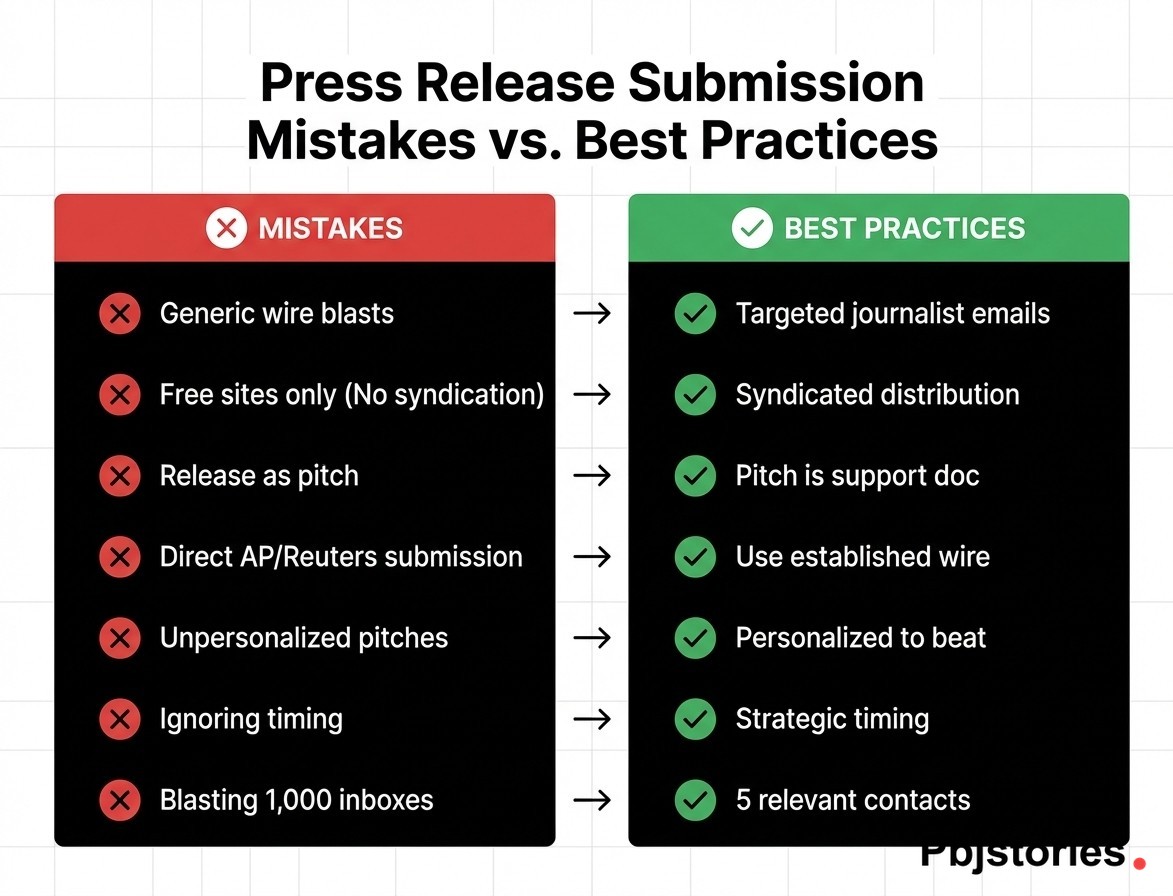
Targeted email pitches consistently outperform mass wire distribution for local and niche media coverage. Personalization drives engagement, and pitching five relevant journalists beats blasting 1,000 irrelevant inboxes.
The core mindset shift: your press release is a support document. The pitch email is the actual strategy that gets a journalist to open, read, and respond. Think of the release as evidence, not the hook.
Finding the Right Reporters, Newsdesks & Assignment Editors
Start by searching outlet websites for reporter bylines on stories similar to your topic. A journalist who covered a comparable story last month is far more likely to engage with your release than a generic inbox.
Media databases like Cision, Muck Rack, and JournoFinder let you filter journalists by beat, outlet, and contact information. These tools speed up research significantly, but they come with subscription costs. LinkedIn and X (Twitter) work as free alternatives for verifying reporter contacts and tracking what topics they currently cover.
For local media, look for the newsdesk or assignment desk email, often labeled "news tips" on the outlet's contact page. TV stations typically route pitches through an assignment editor rather than individual reporters.
Always verify recency. Check the reporter's last three to five published pieces before sending anything. Relevance to their current beat determines whether your pitch gets read or deleted.
Crafting a Pitch Email That Gets Opened
Your subject line determines whether a journalist reads or deletes your email. Write it like a headline they would publish, not a marketing slogan. "Local Bakery Hires 40 Veterans in First Year" works. "Exciting News From Our Amazing Brand" does not.
Keep the email body to two or three sentences explaining why this story matters to their specific audience. Then paste the full press release below the pitch. Never send it as an attachment, because most newsroom email filters flag or block attachments entirely.
Lead with a story angle, not a brand announcement. Journalists need narratives that serve their readers, so frame your pitch around the impact, conflict, or trend your news represents.
Personalize each email by referencing the journalist's recent work. Keep the pitch under 200 words, and send one follow-up at most, three to five days later. Use bullet points for key facts, tell your story in plain language, and drop the corporate tone. For structuring the release itself, see this guide on how to write a press release.
How to Submit a Press Release to Local Media & Newspapers
Local outlets are more accessible than national media. Local reporters receive fewer pitches daily and actively seek community-relevant stories, making local media one of the highest-value targets for small businesses, nonprofits, and regional organizations.
Start by identifying your local newspapers, TV stations, and radio stations. Visit each outlet's website and look for the newsdesk email, "news tips" submission form, or assignment desk contact. Then find reporters who cover your specific beat, whether business, health, education, or local government. A named journalist contact always outperforms a generic inbox.
Format your release in AP style. Most U.S. newspapers follow Associated Press style guidelines, so proper formatting signals professionalism and saves editors time. Use a press release template to ensure your structure meets industry standards.
Timing matters. Send Tuesday through Thursday between 9 and 11 AM in the recipient's local time zone. Mondays bring inbox backlog, and Fridays run on skeleton crews. For events, send at least two to three days in advance so the assignment desk can plan coverage.
Above all, lead with a local angle. Editors prioritize hyperlocal relevance over national significance, so explain clearly why your story matters to their specific community.
Paid vs. Free vs. Direct Outreach: Which Method Is Right for You?
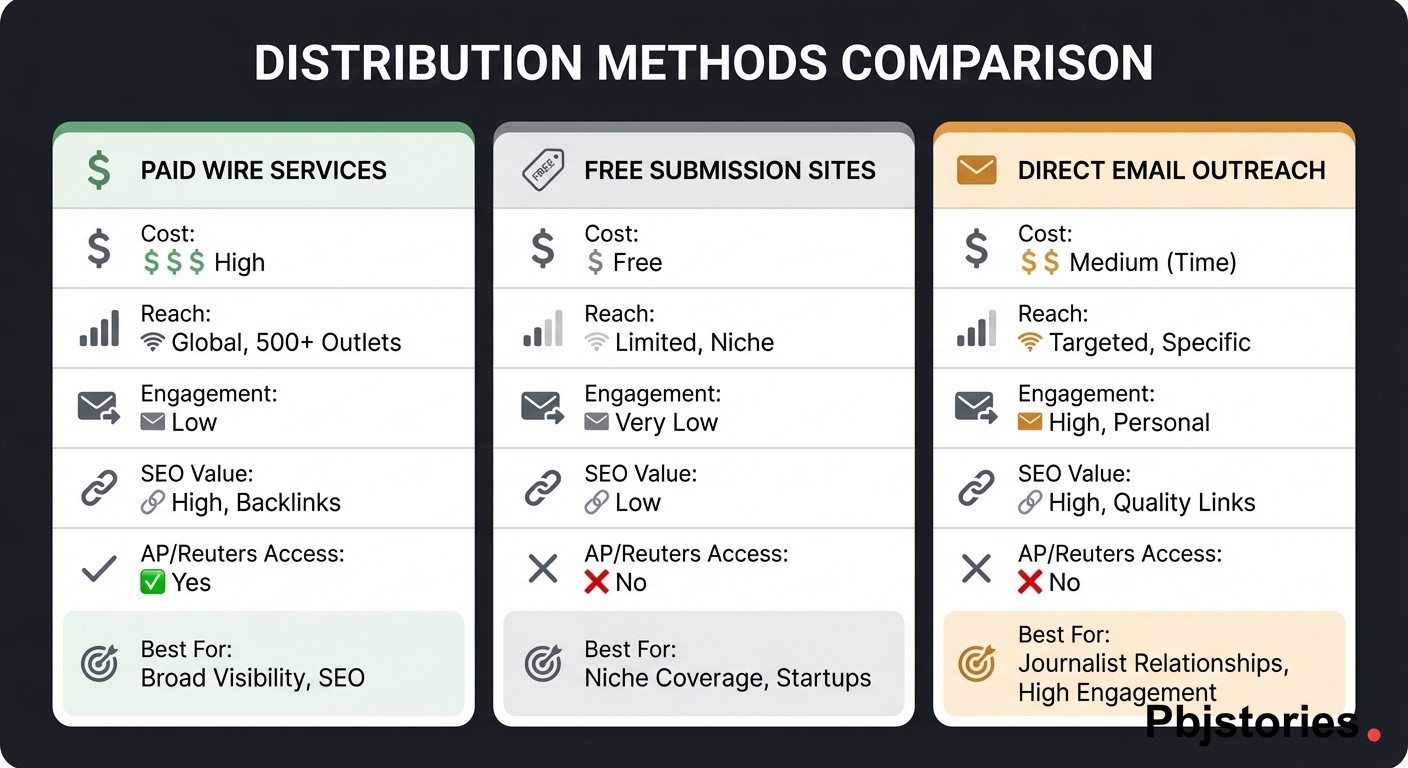
The right method depends on your budget, timeline, and how targeted your audience is. Most effective PR campaigns combine at least two of the three channels.
Paid wire services work best for broad announcements like funding rounds, product launches, and earnings reports. They also serve financial compliance needs such as SEC filings, guaranteeing syndication to Google News, Yahoo Finance, and AP. The tradeoff is cost, typically $99 to $1,500+ per release.
Free platforms suit early-stage companies testing messaging or building basic SEO backlinks. However, media pickup rates are minimal, so free distribution works better as a supplement than a primary strategy.
Direct outreach delivers the highest ROI per pitch for targeted stories, local media, and niche industry coverage. It requires the most effort since each email needs personalization, but a single well-placed story often outperforms hundreds of syndicated placements.
A hybrid approach yields the strongest results: pitch your top 10--20 target journalists individually while running a distribution service for broad visibility simultaneously.
Common Press Release Submission Mistakes and How to Avoid Them
Sending to generic inboxes like info@ or press@ almost guarantees your release gets buried. Always target a named reporter or specific newsdesk.
Never attach your press release as a PDF or Word document. Most newsroom email filters flag attachments, so paste the full release directly in the email body.
A self-promotional pitch is the fastest way to get deleted. Journalists need a story angle that serves their readers, not a brand announcement. Lead with the narrative, not your product.
Mass-blasting 500 outlets without personalization signals spam and burns future relationships. Ten tailored pitches consistently outperform bulk sends.
Formatting matters. Releases that ignore AP style, omit a dateline, or lack contact information look amateur and get discarded by assignment editors.
Follow up once after 3--5 days. More than that damages your credibility with reporters you may need later. And set realistic expectations: even well-crafted releases get picked up by only a fraction of targeted outlets. A 5--10% response rate on direct pitches is considered strong across the industry.
Where to Submit a Press Release: FAQ
Where Can I Submit a Press Release for Free?
The most established free platforms include openPR, PR.com (free tier), PR Log, Online PR Media, and 1888 Press Release. Direct email outreach to journalists is also free and typically generates stronger media pickup than free submission sites. Free services offer basic online visibility and some SEO backlink value, but they provide minimal syndication to major news outlets.
How Do I Submit a Press Release to the Associated Press (AP)?
AP does not accept press releases directly from the public. The standard pathway is through PR Newswire or Business Wire, which maintain contractual syndication feeds into AP. Even through these services, AP editors independently decide what to publish based on newsworthiness. The same applies to Reuters.
How Do I Get My Press Release on Google News?
You cannot submit a press release directly to Google News. Google News automatically indexes content from approved publisher sites, so your release must first appear on a Google News-approved outlet. Distributing through services that syndicate to approved outlets, such as PR Newswire, Business Wire, or GlobeNewswire, is the standard method. Optimizing your release with relevant keywords further improves visibility in Google News search results.
Should I Use a Wire Service or Email Journalists Directly?
Wire services deliver broad reach, financial terminal syndication, and guaranteed placement on news aggregators like Yahoo Finance. Direct email outreach produces better results for targeted, story-driven coverage and local or niche media. The strongest approach combines both: personalized pitches to your top 10--20 targets alongside wire distribution for broad visibility.
How Much Does Press Release Distribution Cost?
Pricing ranges from $0 on free platforms to $1,500+ for premium wire services. EIN Presswire falls in the $99--$199 budget tier, Newswire runs $149--$399, and PR Newswire or Business Wire typically costs $500--$1,500+. Final pricing varies based on distribution reach, geographic targeting, and add-ons like multimedia attachments.
What Is the Best Time to Send a Press Release?
Tuesday, Wednesday, and Thursday between 9--11 AM in the recipient's local time zone consistently yield the highest open rates. Avoid Monday mornings due to inbox backlog and Fridays when newsrooms run skeleton crews. For events, send at least 2--3 days in advance so assignment editors can plan coverage.
Choosing the right mix of wire services, free platforms, and direct journalist outreach depends on your goals, budget, and how quickly you need coverage. The key is matching each announcement to the distribution method that gives it the best chance of earning real visibility, whether that means a broad syndication push or a carefully personalized pitch to a handful of reporters.
PBJ Stories simplifies this process by combining AI-powered writing, SERP-driven keyword optimization, and distribution to 500+ high-authority news outlets in a single workflow. If you want to skip the guesswork around where to submit your next press release, explore PBJ Stories and see how per-release pricing can replace expensive agency retainers without sacrificing reach.
Get PR tips delivered weekly
Join 3,200+ PR professionals getting actionable tips on press release writing, distribution, and media outreach.
No spam. Unsubscribe anytime.