
A well-crafted nonprofit press release turns organizational milestones into media coverage, donor visibility, and community trust. Yet most nonprofits struggle to get journalists to open their emails, let alone publish their stories. The problem is rarely the news itself. It's how the announcement is written, structured, and delivered.
Reporters receive dozens of pitches every day and prioritize releases that read like ready-to-publish news stories. Nonprofits that format their announcements correctly, lead with measurable impact, and pitch the right journalists consistently earn coverage, even without a PR budget. Organizations that skip these fundamentals end up ignored.
From AP-style formatting and fill-in-the-blank templates to free distribution tactics and press release tips that actually work, everything below is built around one goal: helping your nonprofit land real media placements. Whether you're announcing a six-figure grant or a weekend fundraiser, the same structural principles apply.
What Is a Nonprofit Press Release and When Should You Send One?
A nonprofit press release is a formal news announcement sent to journalists and media outlets to publicize newsworthy organizational developments. Unlike corporate releases that center on revenue or product launches, nonprofit releases focus on community impact, mission alignment, and public benefit.
This distinction shapes how journalists evaluate your story. Editors look for how an announcement affects the community, not a bottom line. A food bank securing a major grant or a youth organization launching a mentorship program carries weight precisely because it signals measurable public good.
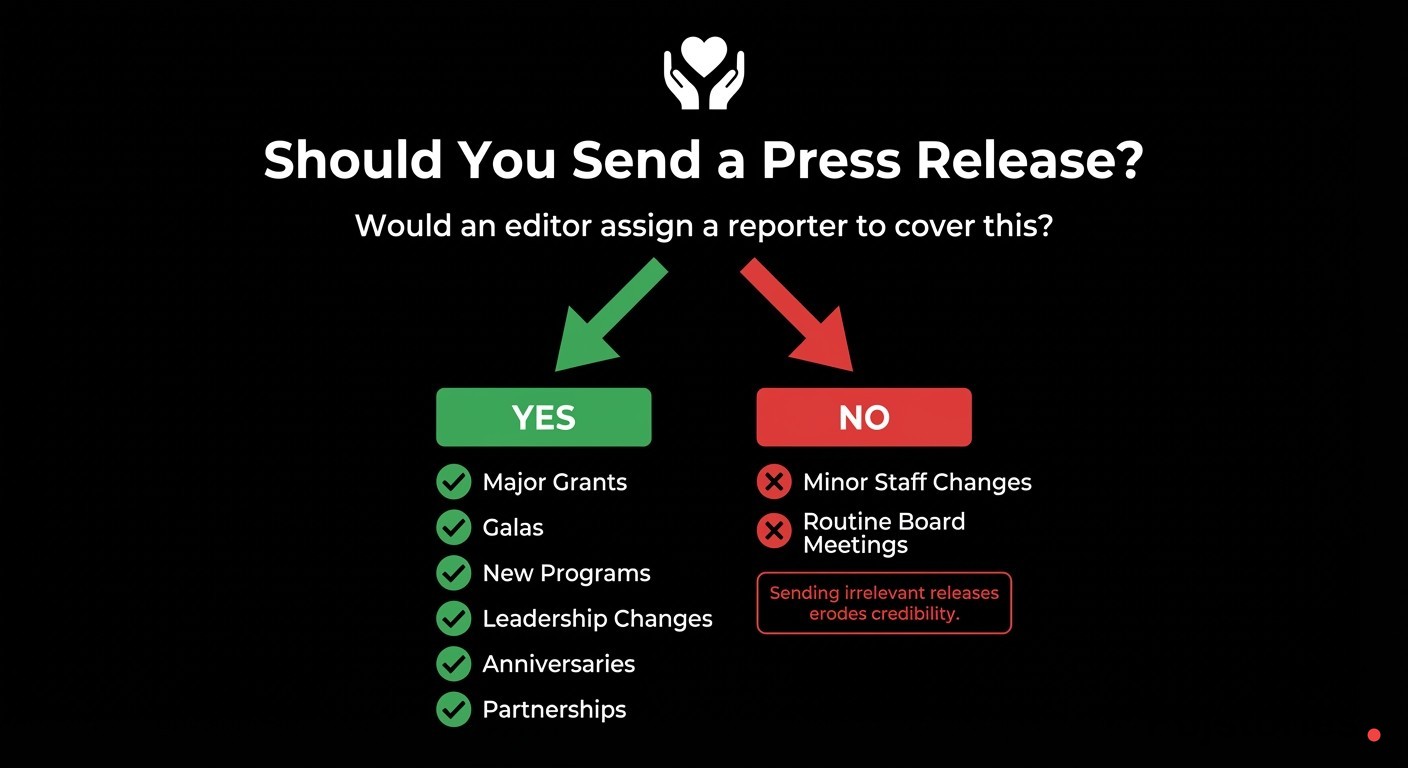
Not every internal update deserves a press release. Sending irrelevant announcements, like minor staff changes or routine board meetings, erodes credibility with reporters. Reserve releases for genuinely newsworthy moments that an editor would assign a reporter to cover.
Types of Nonprofit Press Releases: Events, Grants, Leadership Changes, Launches & Partnerships
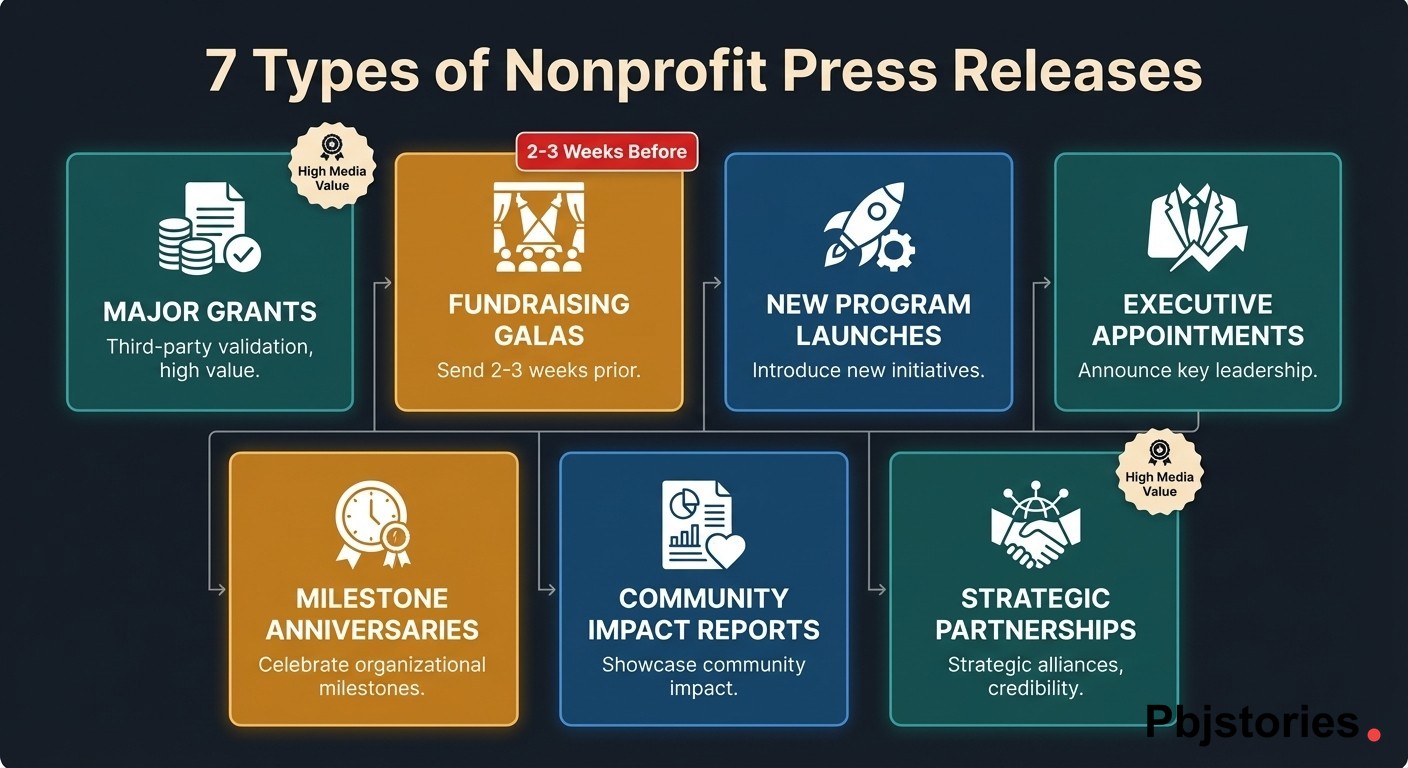
The most newsworthy occasions include major grants received, fundraising galas, new program launches, executive director appointments, milestone anniversaries, community impact reports, and strategic partnerships. Each type serves a distinct purpose and reaches different media audiences.
Event-based releases for galas and community fundraisers should go out 2-3 weeks before the event. Editors need lead time to assign reporters or add listings to community calendars, so waiting until the week of an event often means missed coverage.
Grant announcements and partnership press releases carry particular weight with journalists. Both signal third-party validation, which makes the story more credible than a self-promotional update. Including the funder's name or partner organization strengthens the release further, since those entities may amplify it through their own channels.
New 501(c)(3) organizations announcing their formation represent a specific category: the nonprofit launch press release. These introduce the founding team, the community need being addressed, and how the public can get involved.
How to Write a Nonprofit Press Release
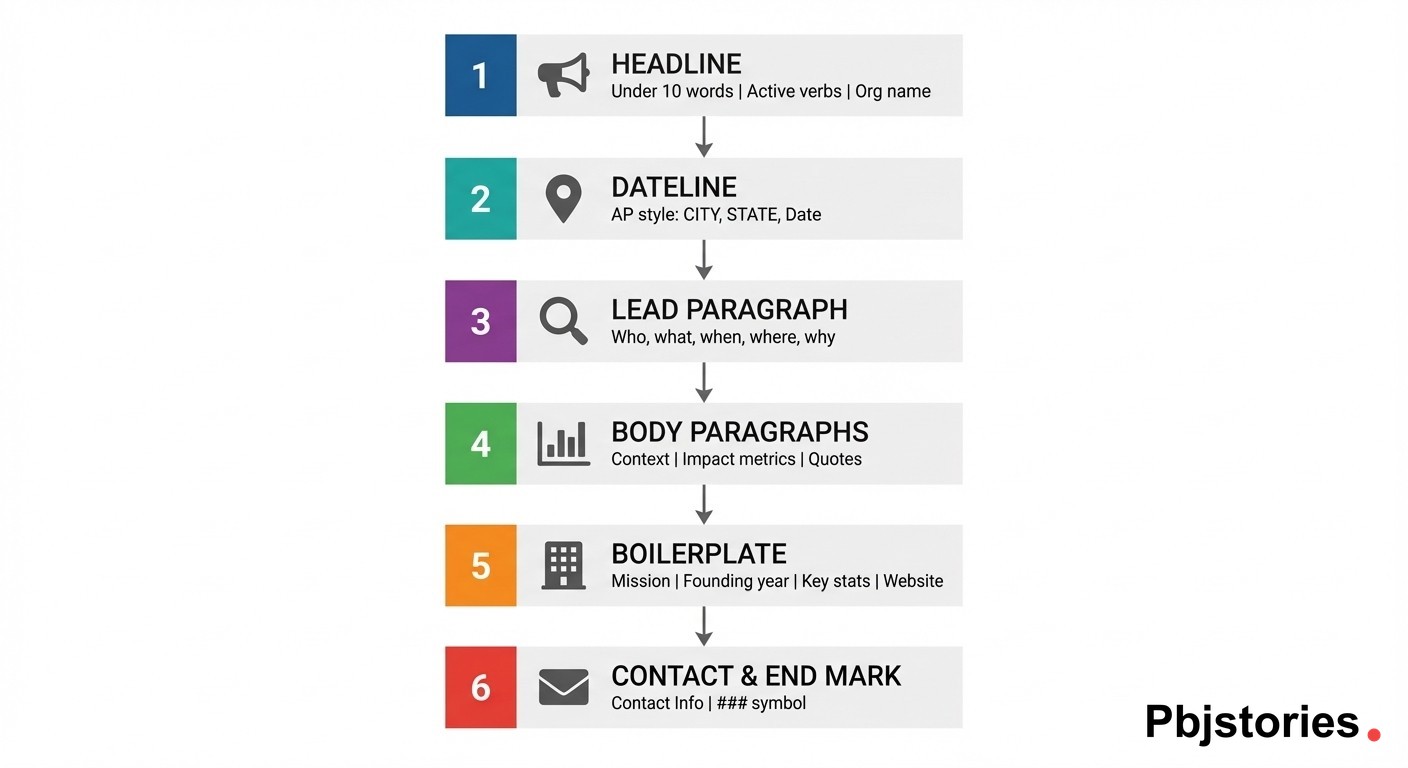
A strong press release for a nonprofit follows AP style formatting and includes six core components journalists expect: headline, dateline, lead paragraph, supporting body, quotes, and boilerplate. The goal is straightforward: provide a ready-to-publish story that requires minimal rewriting.
Anatomy of a Strong Release: Headline, Dateline, Body, Quotes & Boilerplate
Every nonprofit press release contains six components that journalists expect in a specific order. Missing any one of them forces a reporter to chase down information, which usually means your story gets skipped.
Headline: Keep it under 10 words, lead with the most newsworthy element, include your organization name, and use active verbs. Compare "Local Nonprofit Holds Event" with "Habitat for Humanity Breaks Ground on 50th Nashville Home." The second version names the organization, specifies the milestone, and anchors the story geographically.
Dateline: Follow AP style: NASHVILLE, TN, June 15, 2025. This tells editors exactly where and when the news originates.
Lead paragraph: Answer who, what, when, where, and why in two to three sentences. Journalists scan this paragraph first to decide whether the story deserves coverage, so front-load the most compelling fact.
Body paragraphs: Expand with context and impact metrics: number of people served, dollar amount of a grant, or percentage growth year over year. Include at least one quote from the executive director or board chair. Quotes add a human voice and give reporters a ready-made soundbite they can publish directly.
Boilerplate: This standardized "About" paragraph appears on every release. Include your mission statement, founding year, key stats like annual people served, and your website URL.
Contact info and end mark: List a media contact name, phone number, and email. Close with the ### symbol, which signals the release's end per industry convention. For a ready-made format, grab a press release template to ensure nothing gets missed.
Common Nonprofit Press Release Mistakes to Avoid
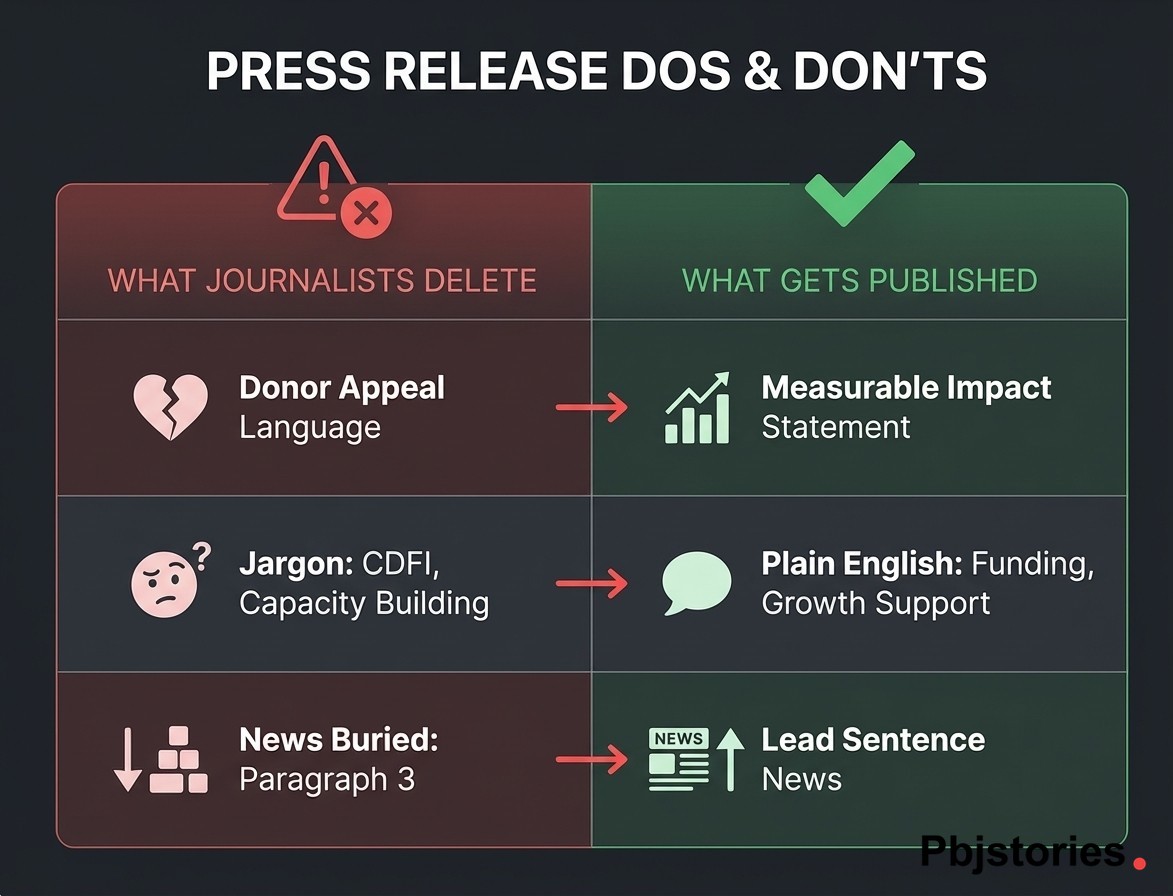
The most damaging error is writing a release that reads like a donor appeal. Journalists need facts and measurable impact, not emotional fundraising language. A release asking readers to "open their hearts" will get deleted. Reporters publish news stories, not donation pitches.
Insider jargon creates a second barrier. Terms like "CDFI" or "capacity building" mean nothing to a general assignment reporter. Define specialized language or replace it with plain English.
Burying the news kills coverage before it starts. If your grant announcement appears in the third paragraph, most editors will never reach it. Lead with the strongest fact.
Two more mistakes compound the problem:
Blasting generic lists instead of targeting 15-30 reporters who actually cover your sector
Omitting concrete numbers, since "served many families" is vague while "3,200 families received meals in Q1 2025" gives journalists a publishable detail
Every weak release sent to the wrong reporter erodes your credibility for the next one.
Nonprofit Press Release Templates and Annotated Examples
Templates save time and ensure no essential element is missed, but every release should be customized with specific details. A fill-in-the-blank format works best as a starting point, not a finished product. For additional reference, browse these press release examples.
Event Press Release Template (Gala, Fundraiser, Community Event)
Below is a fill-in-the-blank format you can adapt for any nonprofit event. Each annotation explains why the element matters to editors.
Headline: [Organization Name] Hosts [Event Name] to [Purpose/Impact] on [Date]
Active verb + organization name + date gives editors the news hook in one scan.
Dateline: CITY, STATE (Month Day, Year)
Lead paragraph: [Organization Name] will host [Event Name] on [Date] at [Venue, City] to [purpose, e.g., raise funds for workforce training]. The event expects [number] attendees, including [featured speakers or honorees].
The lead includes timing and location. Assignment editors use those details to decide whether to send a reporter.
Body: Expand with impact context, ticket information, and a quote from the event chair.
Press access line: "Media credentials and photo opportunities available upon request." This single sentence increases journalist interest by signaling visual content.
Boilerplate and contact info: Close with your standard "About" paragraph, then list a media contact name, phone, and email above the ### end mark.
Grant Announcement and New Program Launch Examples
A grant announcement headline should name the funder and dollar amount directly: "United Way Awards $150,000 Grant to River Valley Youth Services for After-School Expansion." The lead paragraph explains what the grant funds and who benefits. Body paragraphs project community impact, such as the number of youth gaining access to programming. Include quotes from both your executive director and a funder representative. Dual quotes signal mutual endorsement and give journalists two soundbites.
For a new program launch, lead with the need: "River Valley Youth Services Launches Free Tutoring Program to Address 40% Reading Gap in County Schools." The body covers enrollment details, eligibility, and how families can access services.
Including the funder's name is strategic. It adds third-party credibility, and funders frequently share the release through their own communications channels, effectively doubling your reach at no additional cost.
How to Distribute a Nonprofit Press Release on Any Budget
Most nonprofits operate with little or no PR budget, and paid newswire services often deliver disappointing ROI for small organizations. Distribution breaks into two practical tracks.
Free DIY outreach works best for local and regional news. Reporters in those markets value personal relationships over syndicated feeds, so direct emails to targeted journalists consistently outperform mass blasts.
Paid distribution services are best reserved for major national announcements where wide syndication and SEO benefits justify the cost. A mix of both tracks gives nonprofits the broadest reach at any budget level.
Free DIY Distribution: Building Media Lists and Pitching Journalists Directly
Start by identifying 15-30 highly relevant journalists rather than blasting 500 generic addresses. Visit local newspaper staff pages and search LinkedIn for reporters covering community news, education, or health, depending on your nonprofit's sector. Also include TV assignment editors and radio producers who handle local interest stories.
A focused list outperforms a massive one. Journalists respond to pitches that match their beat, and irrelevant emails get flagged as spam.
Structure your email pitch like this:
Subject line: Lead with the news hook ("Food Bank Opens Third Location in [City]")
Body: Two to three sentences explaining why this matters to the journalist's audience
Below the pitch: Paste the full press release directly into the email, never as an attachment
Closing: Offer a specific interview or photo opportunity with a named spokesperson
Beyond direct outreach, submit events to newspaper community calendars and post the release on your organization's website newsroom page. Share it across your social media channels. Platforms like HARO (Help a Reporter Out) connect nonprofits with journalists actively seeking sources, extending your reach at zero cost. For expanded tactics, explore this free distribution guide.
Paid Newswire Services: When They're Worth It and Affordable Options
Services like PR Newswire and Business Wire charge $200 to $1,000+ per release and syndicate to hundreds of outlets, including Google News and Yahoo Finance. That cost adds up quickly for organizations on tight budgets.
Paid distribution makes sense in specific situations: national announcements, major grants from recognizable funders like the Ford Foundation or Robert Wood Johnson Foundation, or when your nonprofit needs SEO backlinks from high-authority news domains. The syndication creates indexable coverage across dozens of sites, which strengthens your organization's online visibility over time.
However, for most local nonprofit news, direct journalist outreach still delivers better coverage. Local reporters value personal relationships over syndicated feeds, so reserve paid wires for announcements with genuine national reach.
Tips for Getting Media Coverage as a Nonprofit
Relationship-building with journalists matters more than any distribution platform. PR professionals in nonprofit communities consistently echo this point: reporters cover people they trust, not organizations that send cold emails once a year.
Start before you need coverage. Follow local reporters on social media, comment thoughtfully on their stories, and offer yourself as a source for topics related to your mission. When you eventually send a release, the journalist already recognizes your name.
And understand the difference between a press release and a media pitch. The release is the formal news document. The pitch is the short, personalized email explaining why this story matters to that journalist's specific audience. Use both together: pitch in the email body, full release pasted below.
Tie your announcements to larger news hooks. A food bank's fundraiser release gains traction during a USDA hunger report or the holiday giving season. Editors look for local angles on national stories, so timing your distribution around these moments increases pickup rates. Understanding the best time to send a press release can further improve your chances.
Build a nonprofit press kit containing high-resolution photos, a fact sheet with key impact stats, leadership bios, the boilerplate, and the release itself. Having these ready saves reporters time and increases your chances of coverage. For more guidance, review these press release writing tips.
Writing in AP style signals professionalism and reduces the editing work needed to publish your story. Would a reporter rewrite your entire release to fit their style guide? Probably not. They'd move on to the next pitch.
Nonprofit Press Release FAQ
How Long Should a Nonprofit Press Release Be?
300-500 words, roughly one page, is the ideal length. Journalists prefer concise releases they can scan in under two minutes. Releases exceeding 600 words risk being ignored, since reporters receive dozens of pitches daily and prioritize those that communicate news quickly.
If your announcement genuinely requires more context, add a linked fact sheet or backgrounder rather than inflating the release itself.
Can a Small Nonprofit with No PR Budget Get Media Coverage?
Yes. Many successful nonprofit communicators rely entirely on direct outreach to local journalists, building relationships over time rather than paying for syndication. Reporters value community impact stories, so a genuinely newsworthy release about families served or programs launched earns coverage without spending a dollar.
Free tools like HARO connect you with reporters actively seeking sources. Newspaper community calendars accept event submissions at no cost. These channels extend your reach without requiring a PR line item in your budget.
What Is a Boilerplate in a Nonprofit Press Release?
A boilerplate is the standardized "About" paragraph appearing at the end of every release your organization sends. It includes a one-sentence mission statement, founding year, key impact metrics, and website URL.
For example: "Founded in 2012, River Valley Youth Services provides after-school programming and mentorship to 4,500 young people annually across three counties. Learn more at rivervalleyyouth.org."
Keep the boilerplate under 50 words. Update it quarterly so metrics stay current.
Should Nonprofits Use a Paid Press Release Distribution Service?
Paid services offer wide syndication, SEO backlinks from high-authority news sites, and Google News inclusion. The tradeoff is cost: $200 to $1,000+ per release on platforms like PR Newswire or Business Wire.
Paid distribution makes sense for major national announcements, large grants from recognizable funders, or when your organization needs the SEO benefit of appearing across dozens of indexed news domains. For local or regional news, however, direct journalist outreach consistently delivers stronger coverage. A practical approach: reserve paid distribution for two or three flagship announcements per year and handle everything else through direct media outreach.
What Is the Difference Between a Press Release and a Media Pitch?
A press release is the formal news document containing your headline, dateline, body, quotes, and boilerplate. A media pitch is the short, personalized email explaining why a specific journalist's audience should care about this story.
Nonprofits should use both together. Paste the pitch in the email body (three to four sentences maximum), then include the full press release below it. The pitch convinces the journalist to keep reading. The release gives them the complete story.
Reference the reporter's beat or a recent article they published. This personalization signals that you chose them deliberately, not as one name on a 500-person blast list.
Writing a strong nonprofit press release takes the right structure, a newsworthy angle, and a distribution plan that actually reaches journalists. If your organization needs help turning announcements into published coverage, PBJ Stories simplifies the entire process with AI-powered writing in AP style and distribution to 500+ news outlets, including Google News and Yahoo Finance.
Whether you're announcing a fundraiser, a new program launch, or year-end impact results, you can explore PBJ Stories nonprofit press release tools to get started. Per-release pricing means no monthly retainer, so even small nonprofits with limited budgets can earn the media visibility their mission deserves.
Get PR tips delivered weekly
Join 3,200+ PR professionals getting actionable tips on press release writing, distribution, and media outreach.
No spam. Unsubscribe anytime.